I was busy applying for a Biology PhD at Harvard, hoping to take the next big step towards becoming a professional scientist, when Harvard’s president Larry Summers announced his conviction that women were biologically unsuited to the sciences.
“There are issues of intrinsic aptitude, and the variability of aptitude,” he said, using scientific language against us. “Those considerations are reinforced by what are in fact lesser factors involving socialization and continuing discrimination.” These weren’t off the cuff remarks. This was a prepared speech at a Conference on Diversifying the Science & Engineering Workforce. Summers delivered it with the confidence of a man expressing an inconvenient truth. And he was no outlier. He was just an educated man saying what many great men of academia and science were saying back then. That male overrepresentation in STEM was essentially a result of natural selection. That women simply didn’t possess the same aptitude for objective analysis. That perhaps we were gifted in more subjective intellectual pursuits. That the historical oppression of women, and their near-total exclusion from science until recently, was at best a negligible factor in our underrepresentation in the field.
Those comments hung over me when I arrived at Harvard the following year. Summers had recently left the job, after continuing on for a year with a salary raise. I was busy trying to find my voice in a heavily male department, in a university where only a small minority (19%) of the student body voted to oust Summers as president, and many big names had come out in his defense. While Summers moved on to bigger things[2], I felt his way of thinking all around me. Even as I was busting my ass in one of the toughest programs in the country, high-placed men kept reminding me that I was a young woman. Their way of speaking down to me betrayed a deeply held belief that only they could be objective and rational. Someone like me simply could not. And this belief was backed by real power. These were the people deciding who got what job, what research was pursued. They were the ones deciding what science meant and how it would change the world.
One of the reasons I had fallen in love with science in the first place was this idea that it had a right and wrong answer, that it didn’t matter what your opinion was, who you were, as long as you were applying the scientific method. That notion of objectivity had once offered a safe space to me. As a scientist, I thought, I couldn’t be reduced to my gender any longer. Experience taught me otherwise, and this broke my brain. My beloved subject wasn’t as pure and objective as I wanted it to be. The very idea of objectivity was being used against me. It may have been demoralizing to become a scientist while a debate raged around me about my inborn qualifications, but it also robbed me of certain illusions. I had long been a feminist and a scientist, but men like Larry Summers set me on the path to becoming a feminist scientist.
This meant a lot of rethinking, reading, and re-reading. The deeper I looked, the more I realized how much of our idea of what it means to be a scientist or engineer is wrapped up in cultural ideas about gender and race. And this had bred a very one-sided, dominance-minded view of scientific thinking over hundreds of years. The beneficiaries of this system perpetuated it, creating structures that were inhospitable to people of other backgrounds and genders, and crafted scientific-sounding rationales to justify it all.
I became a feminist scientist not only because I thought diversity was socially desirable, but because I came to see the lack of it as bad for scientific research. Labs full of white male scientists had produced a lot of discriminatory, junk science. Their blind spots had allowed for abominations like eugenics and phrenology. This persists until this day, in a less virulent form, and can be seen all over our society: in the artificial heart that didn’t fit 80% of women; the many drugs that are taken off the market because experiments reveal they have drastic side effects for women; the clinical misjudgments driven by mythologies about women and minorities having higher pain thresholds; color film that doesn’t capture darker skin tones; eeg electrodes that only work for people with straight hair. Back then, in grad school, changing the culture that allowed for these oversights became one of my life’s goals.
Prevented Careers, Ignored Achievements
Combatting this issue required understanding it first. My years as a science writer allowed me to read voraciously. Being a feminist scientist is harder work than being an alpha male scientist in the classic mold. Your heroes are not as readily available. They have yet to be placed on the pedestals they deserve. Women have historically been prevented from participating in scientific inquiry, as in almost areas of societal influence. And where they couldn’t be repressed, their achievements were largely effaced from history.
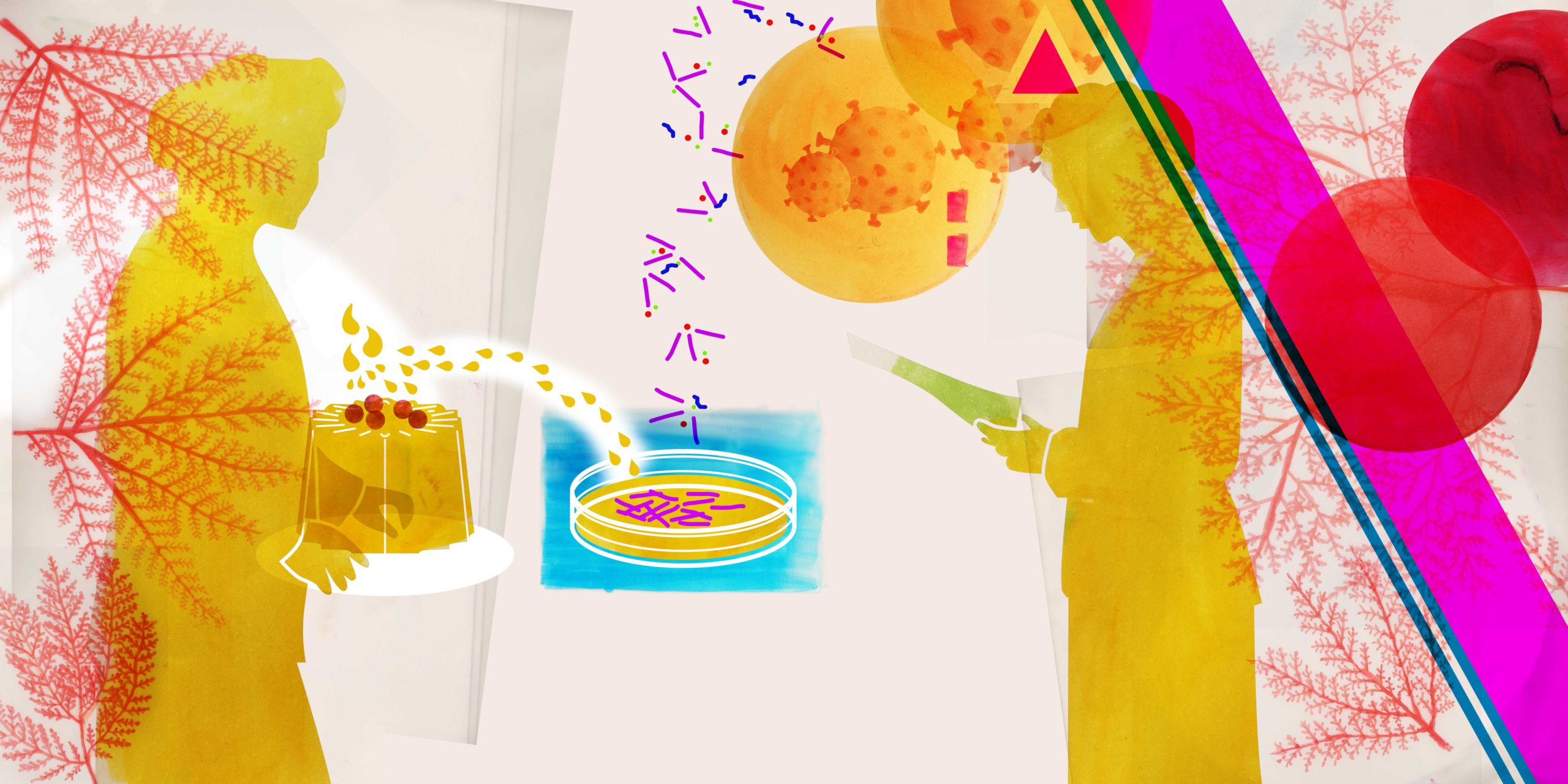
I often think about the story of Angelina Fanny Hesse, who only required a short cameo in her scientist husband’s practice to decisively advance microbiology, making the isolation of bacteria possible in the 1880s. Her husband Walther worked for Robert Koch, one of the founders of microbiology, and was struggling to find the right sort of gel for Petri dishes. Angelina, who cooked both the family’s meals and the beef stock that the bacteria ate in her kitchen, walked in one day and suggested that Walther use agar-agar, which is more heat-stable than gelatin and used to make soups, desserts, and jellies, particularly in Asia. This short chime-in from someone, who had been listening but never involved, solved many of the technical problems hindering Hesse’s—and therefore Koch’s—experimental progress. Koch briefly mentioned the development in his 1882 paper announcing the identification of the bacteria that causes tuberculosis, but he didn’t mention Walther, let alone Angelina.
The history of science is full of these neglected minds, who, given even the slightest chance to educate themselves and develop their ideas, made major contributions to our knowledge of the world. It is tragic to think of how much further science would be these days if women and people of color had historically been allowed equal access. And how many ethical quagmires might have been avoided.
If you scratch the surface of the stories we tell ourselves about innovation, you’ll see people of all genders that were there all along. Anyone who didn’t fit the archetypal mold was ignored, undervalued, cut out of the official story, sometimes literally cropped out of the frame. The history of computers illustrates this well. A simplified, sanitized version of it usually begins in the respective garages of the world’s most famous nerds. The visionary engineer, the computer nerd, the charismatic founder, the ruthless venture capitalist, the contemporary brogrammer — the many characters that animate the story of Silicon Valley almost all happen to be male. Where are the women? If you read the wrong Twitter threads or leaked internal memos, you might be convinced that the absence of females is simply a result of their biologically determined disinterest in technology, somehow coded in our DNA and the grooves of our brains. But this is a lazy understanding of not just biology and gender, but also of technology and history.
This was demonstrated wonderfully in Claire Evan’s book Broad Band: The Untold Story of the Women Who Made the Internet, which tells the story of the women who programmed the ENIAC computer. Betty Snyder and Betty Jean Jennings programmed the massive computer before the word “programmer” existed, coaxing the machine to calculate military ballistics trajectories. After the ENIAC’s official unveiling to the scientific community, newspapers ran photos of the event with the two Betties cropped out. Their story and those of the female “computers,” who calculated those trajectories by hand before computers were machines, were deliberately erased from the official account. These are the people that actually made modern computing possible. It’s taken decades to get their stories told.
Consider the impact of that kind of erasure. Imagine all the women who grew up thinking science and technology was a man’s game.
The Metaphors We Use
The male domination of science goes beyond burying female achievement. It has had a particularly profound effect on how we conceptualize scientific processes. This starts at conception. Egg and Sperm by Emily Martin shows how the details of procreation have been distorted by stereotypes about men and women. It turns out that sperm does not race valiantly and ultimately pierce a passive egg. That is a myth bred by monoculture.
One of the writers that helped me get my head around how these distortions occur, and the toll it takes, was Evelyn Fox Keller. Keller started writing in the 1970s about the heightened drop-off of female students the higher you went up the academic ladder. This was driven, she thought, by the cultural construction of science — the widespread notion that objectivity was a male domain. “The relationship between gender and science is a pressing issue, not simply because women have been historically excluded from science, but because of the deep interpenetration between our cultural construction of gender, and our naming of science. The same cultural tradition that names rational, objective, and transcendent as male, and irrational, subjective, and immanent as female, also, and simultaneously, names the scientific mind as male, and material nature as female…Actual human beings are of course never fully bound by stereotypes, and some men and some women—and some scientists—will always go beyond them. But at the same time, stereotypes are never idle.”
I had the pleasure of sitting down with Evelyn Fox Keller a few years ago over tea and she explained it to me in detail, and recounted what talking about this in public was like in the 70s and 80s. “I was talking about how the language of science was shaped by our assumptions about gender, our model of science on gender, and the use of gendered metaphors in science. My assumption was that our metaphors and the way we talk about science affected the science we did. I was operating on the assumption that language affects the way we think and what we do, and this was the first time I realized that wasn’t obvious” The field of Biology, as she saw it, was marked by these distortions, but its advances also offered a way to outgrow them. “All kinds of assumptions that we made because they just seemed obvious are being overturned,” she said to me.
What We Can Do
Correcting these misconceptions has been one of the reasons I was drawn to science communication, because the metaphors we use, the stories we tell, can have such a profound influence on how people see the world, and which of us feel empowered to partake in scientific inquiry. I always saw it as an advantage that I was working in a relatively new scientific field, synthetic biology. Everything was in flux, all the way down to the way the field defined itself. We didn’t have to make the same mistakes as other areas of STEM. In fact, we couldn’t afford to. Given that we were imagining technology that could so dramatically reshape our very nature — and with the horrific story of eugenics hanging over all attempts at genetic engineering — it seemed like a no-brainer that our field would be governed by a diverse conversation.
However, when I started working in synthetic biology, I found many of the same biases at work.
Self-styled great men of science were taking up so much of the oxygen in the room. Obsessed with the idea of turning bioengineering into a “true” engineering discipline, their view of synthetic biology was a story of domination, subjecting nature to our grand experiments rather than cooperating with it. George Church, inevitably, became the face of this development. In 2010, he spoke controversially about the need for diversity and female participation, in the context of bringing back the Neanderthal. “If society becomes comfortable with cloning and sees value in true human diversity, then the whole Neanderthal creature itself could be cloned by a surrogate mother chimp — or by an extremely adventurous female human.” This was a vivid representation of how the great men of Synbio saw themselves and how they saw us. They were the adventurous creators of new life. If we were lucky, and adventurous, we could be the vassals, the hosts, of their experiments.
Another great myth-maker, Craig Ventor, invented a new cell and called it Synthia, coded feminine, just as the scientists responsible for the first cloned sheep named it Dolly, after Dolly Parton (get it: because of her breasts). Ventor performed a perfect caricature of the macho scientist in a now infamous 2013 article. “As a scientist, an optimist, an atheist and an alpha male I don’t worry,” he said. “As a scientist I explore and seek understanding of the world(s) around me and in me. As an optimist I wake up each morning with a new start on all my endeavors with hope and excitement. As an atheist I know I only have the time between my birth and my death to accomplish something meaningful. As an alpha male I believe I can and do work to solve problems and change the world.” The association was clear: being an alpha male was a foundational requirement for scientific success. Luckily, this was only one side of the synbio story, which is still being written.
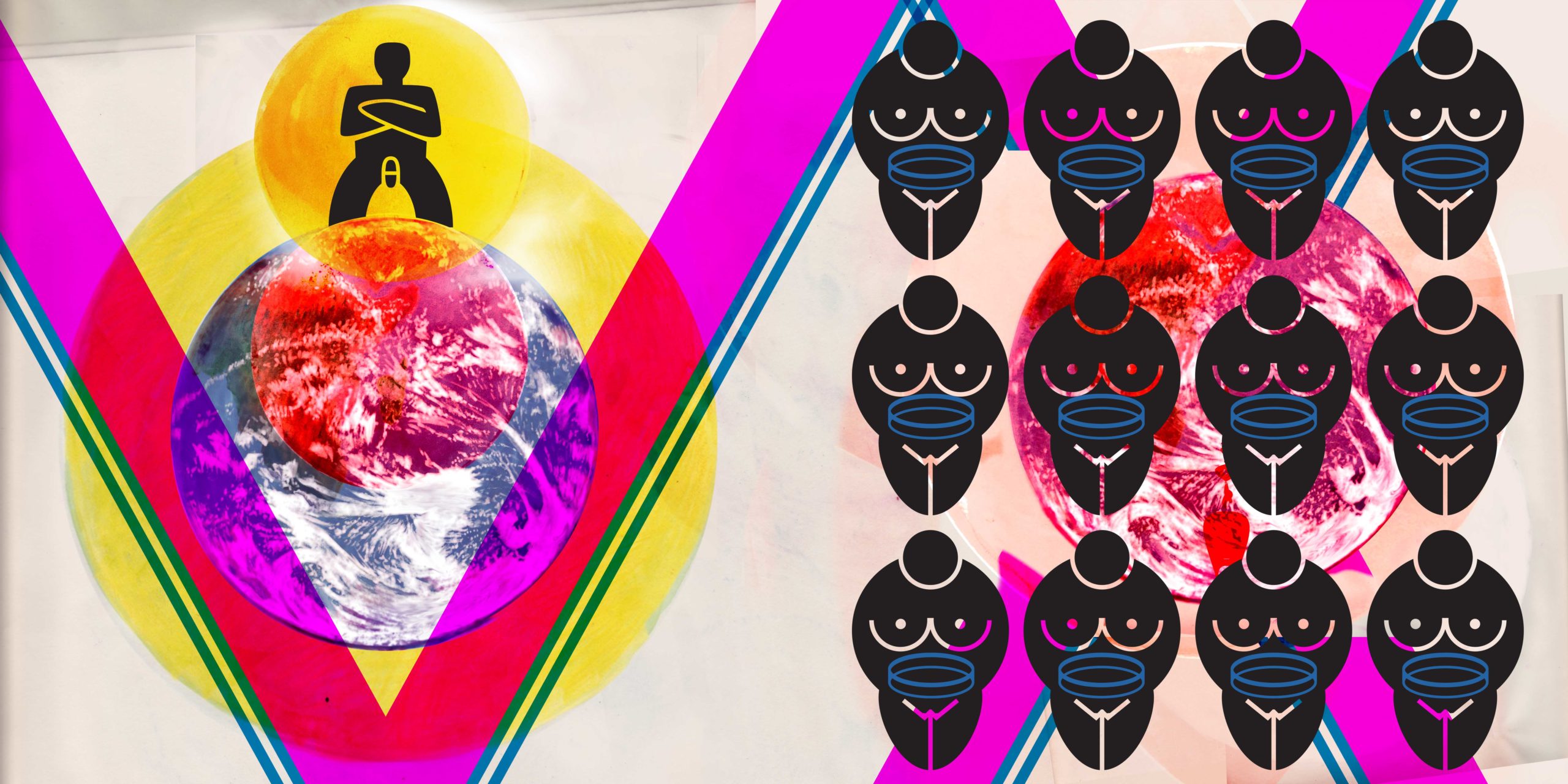
In some ways, synthetic biology doesn’t exist yet. We have tools for engineering biology. We have a growing community that calls itself synthetic biology. But this idea of controlling life and rewriting nature remains a future possibility. While this is up in the air, there is a lot of room to conceptualize what the field is. As a feminist scientist, hoping to counter the narratives of alpha male dreamers, I believe that we need to emphasize cooperating with nature rather than dominating it. Biology is soft and messy. It doesn’t behave like a machine. The field has to come to terms with the fact that engineering is a social science, that building a new kind of technology requires more than technical expertise. We have to appreciate biology on its own terms, not just as an imperfect machine that needs refactoring, but as a complex, interconnected, and incredibly powerful set of relations in our bodies and our world.
The future of synthetic biology is a future where biological metaphors shape our thinking more than machine metaphors, and where industrial logics are based on renewable cycles rather than linear extraction. This is a feminist approach, because feminism is not about putting women at the top of the same kind of power structures, but critiquing and changing the structures themselves. The power of this kind of thinking comes in imagining a multiplicity of futures and a multiplicity of ways of living together.
That means rethinking hiring practices, which have staffed our industry overwhelmingly with men (2/3rds, roughly), particularly the closer you get to the top (85% of CEOs); but, as I hope I showed in this essay, it also has to be addressed on a cultural level. That means rethinking the stories we tell about ourselves. This magazine is an attempt to do just that. We want Grow to outgrow some of the traditional biases of scientific storytelling.
If the story of synthetic biology is still being written, we intend to not tell it purely from the point of view of history’s traditional winners. We want to profile the kind of innovators who usually get ignored. We want to think beyond the metaphors and concepts left behind by the old monoculture. We want to cover the phenomenal innovation happening around us today without ignoring ethical implications. Above all, we want to imagine and work towards a future where everyone has equal say. This is crucial to Synthetic Biology serving everyone equally, and its awesome power of redesigning life breeding more hope than paranoia.
[1] This was one step removed from the Bell Curve theory about racial intelligence, which also had supporters in academia at the time, thanks to a few Havard thinkers who sought to explain away white supremacy as a natural result of superior IQs. It was always important for the boy’s club to tell themselves that they’d outsmarted everyone else.
[2] He went on to serve as Treasury Secretary in the Obama administration, and didn’t measure his conduct much. He continued to associate with a trafficker and abuser of young women, prolific Harvard donor Jeffrey Epstein, long after the latter’s conviction, still remains in the good graces of the liberal establishment. Today, he is one of Joe Biden’s key advisors.